
NOTE: We can embrace the spirit or essence of yogic philosophy (or any belief system) rather than rigidly adhering to it as a set of absolute, unquestionable truths. The ideas in this blog post invite us to see beyond what is visible. We can reflect on and question how these abstract concepts relate to our modern lives and use them to better ourselves if we choose. As always, take what works for you and set aside the rest.
The Beginning
Yogic philosophy proposes the idea that before there were galaxies, rocks, stars, land, water, bacteria, or viruses, animals, or humans there was an unmanifested power with no beginning or end. This infinite, absolute force created everything that has ever existed and will continue to make everything that ever will be.
What the yogis believed about this idea of pure consciousness- or god, or universal love, or an all-loving creator, may appear as an impossibility because this theory is inconceivable and immeasurable. Our brains can not possibly grasp this abstract concept because we only understand what exists, like heat from a fire or music from sound waves.
But if the yogis are right, then everything and everyone who enters the world is already whole, complete, and worthy since all things come from this force of perfection- which includes us humans. (NOTE: This does not mean we get to misbehave without suffering the consequences, but I will save that for a different blog post).
Duality Is Only An Experience

Now, this absolute force wanted to experience itself. To do this, it needed to create duality, which is the next stage of the creation of the Universe. Without this contrast, experience would not be possible. After all, one cannot experience light without darkness, happiness without sadness, or night without day.
Something important to note is that the duality the force created is only an apparent division, like an overlay splitting the circle of consciousness into two. In reality, these two parts are still a part of the same whole, unmanifested absolute, which remains vibrating in the background. But as humans, we become completely lost in this duality. We forget about the unity and perfection that underlie it all. We forget what we are and where we came from.
Yin Meets Yang

The yin and yang symbol represents the apparent division—or duality—of opposites. It also shows that these opposites are not in conflict but in flow and relationship with one another. Yin cannot exist without yang, and yang cannot exist without yin.
Within the white (yang) is a dot of black (yin), and within the black (yin) is a dot of white (yang), reminding us that each contains the seed of the other. These forces are fluid, relative, and always interdependent.
All things can carry both yin and yang qualities, depending on context and perception. Take a solid white wall as an example. One person may conclude that the still, motionless, and light qualities of the wall appear more yang. Another person may view the solid, bright, and transformative potential of the wall as more yin.
Both are right.
Just like day contains shadows and the night sky holds sparks of light, the white wall contains seeds of yin and yang.
The Space Where Life Unfolds

The curved line between yin and yang does not divide them—it unites them. It symbolizes their constant flow into one another, like night turning into day, rest into action, or inhalation becoming exhalation. This line represents movement and transformation, reminding us that nothing is purely yin or yang; each always contains a trace of the other.
This space is constantly shifting. Sometimes, one force takes over, almost completely eclipsing the other. For example, in the middle of winter, yin is more present, while only a faint trace of yang remains. At other times, yin and yang are more equal, like when we have established a reasonable work-life balance.
It is in this ever-changing in-between space where our lives unfold. We live not in pure yin or pure yang but in the constant movement between them.
Unity
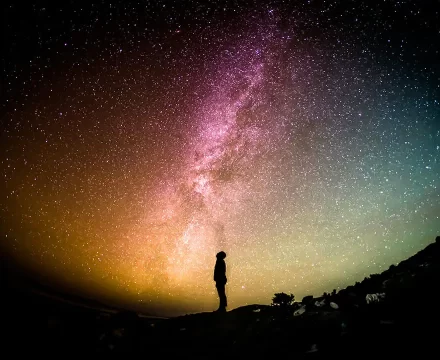
Duality is only a way of helping us experience and relate to the world. We tend to categorize people, places, and things in an attempt to understand them better. When we remove the overlay of these seemingly separate forces, we uncover that they are expressions of a single, unbroken whole. Behind opposites lies unity- or rather, the source of perfection and immeasurable bliss where it all began.
Let Us Apply This To Running (Or Anything Really)

I recently began training for a well-known Alaskan running race, Mount Marathon, with an impossible goal in mind. During my training, I developed a relationship with the yin and yangs of running, or rather, the lighter and darker sides of the sport.
The light side is filled with exhilarating training runs, a plethora of endorphins when zooming downhill, successful races with personal bests and podium finishes, legs that feel weightless, pain-free workouts, time with friends, and opportunities to explore breathtaking landscapes. When we are on the light side of running, we feel proud of our efforts, excited for future challenges, and ready to take on any mountain. Running fuels our soul, and so we run with enthusiasm and grit. The light side of running helps us remain committed to our goals and believe in ourselves in new ways while we push ourselves to go beyond our self-imposed limitations.
This side of running is fun, but it can also become dark when we become attached to only experiencing these outcomes. Our spirits can also begin to darken when we misinterpret these experiences as who we are or allow them to affect our innate self-worth.
Now, the dark side of running offers moments when we feel unmotivated, discouraged, bored, and perhaps worst of all, like an absolute imposter. Here, we find ourselves questioning, ‘What the hell is the point?’ Our legs feel like sandbags, our joints yell in protest, and our minds talk incessantly about why we should quit. On the dark side of running, we may encounter injuries, overtraining, sicknesses, or a loss of will. There may be embarrassing failures and shame that disturb our sleep. We may engage in harmful habits that negatively impact our health and well-being, like under-fueling our bodies or pushing ourselves too hard in an attempt to feel adequate.
This side of running can be less fun but is necessary if we wish to experience the light. For example, we may have to experience injuries to learn how to recover stronger. We can use our failures and self-doubt to deepen our relationship with resilience and inner confidence. Already, we have everything we need within us to make it through the darker times- which will inevitably pass and remain unrelated to our worthiness. And yet, we forget this.
Returning To Wholeness
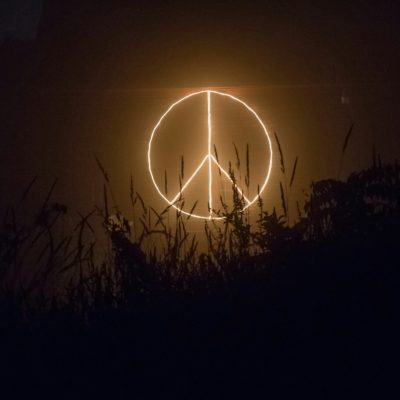
Running and everything in the world contains elements of light and dark, yin and yang, good and bad. One cannot exist without the other. This duality creates experiences for us to feel, grow, learn, and understand what it means to be human.
Our lives constantly flux between these dualities. We should enjoy the highs without becoming too attached to them. And we should wade through the lows, knowing they will inevitably pass. Each phase is a necessary step to get to the next, so we must not hold on too tightly.
And no matter the outcome of our efforts or which side of the yin-yang we find ourselves in, we must always come back to the beginning- which is that place of wholeness, bliss, and perfection vibrating from within that created all that ever was and will be.
This force is who we are.






So well written… life = Yin & yang.. black & white..so life! Easy to forget.. think everything should be easy.. happy…